The man behind the name
Ziryab, the blackbird of Córdoba
Who the 9th-century musician Ziryab was, what tradition says he brought to Córdoba, and why a Madrid flamenco café carries his name.
Reserve your flamenco hour ↗Quick answer
Ziryab was a musician born around 789 or 790, most likely in Baghdad, who became court musician to the emir Abd al-Rahman II in Córdoba and died there around 857. His name means blackbird. Tradition credits him with a fifth pair of strings on the oud and with one of Córdoba's first music schools. Café Ziryab in Madrid takes its name from him.
A musician from Baghdad
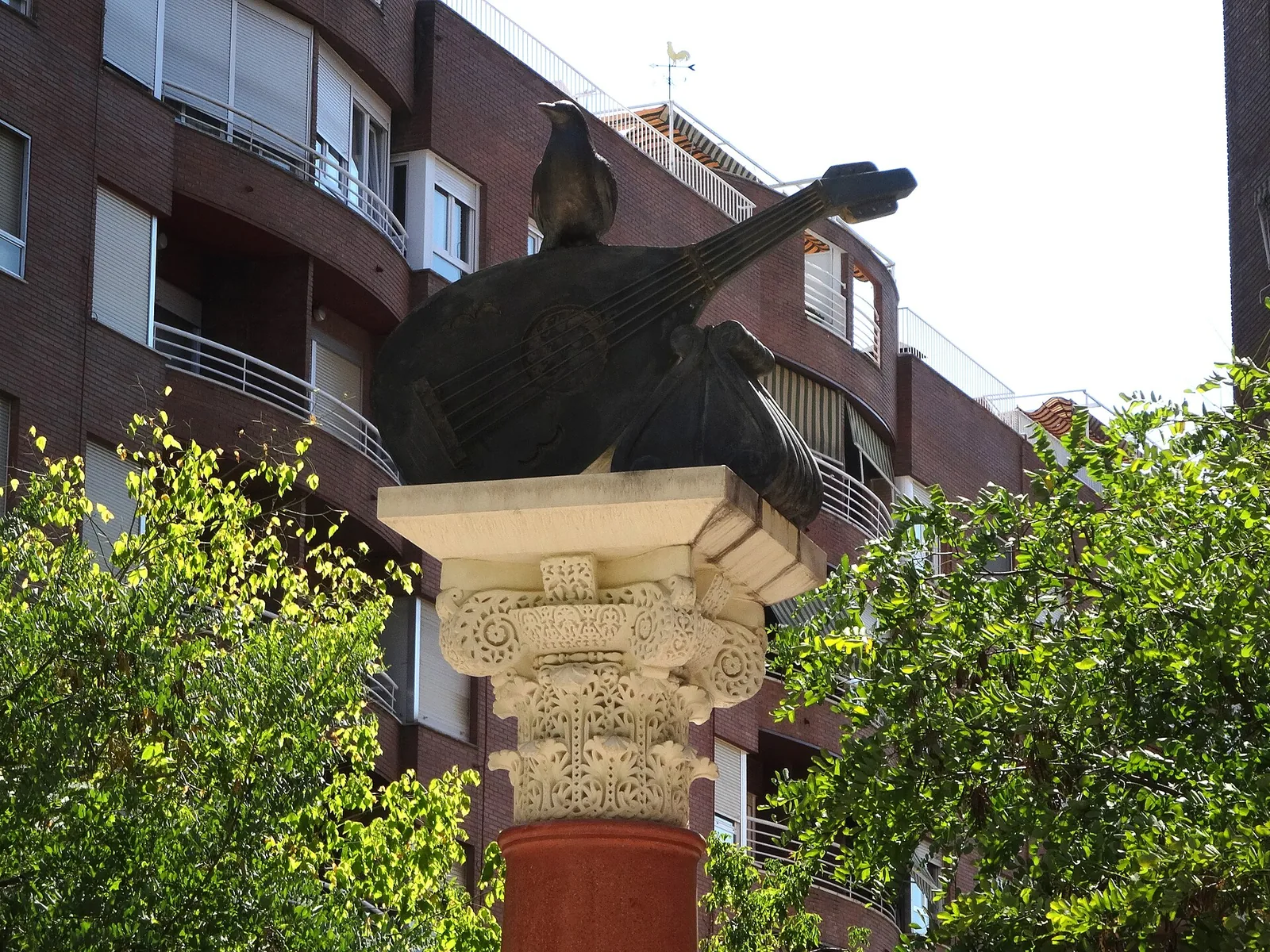
According to Wikipedia, Ziryab was born around 789 or 790, most likely in Baghdad, though the year varies between accounts. He trained there under a court musician, Ibrahim al-Mawsili. His name, a Persian and Kurdish word for blackbird, was explained by the chronicler Ibn Hayyan as a nod to his dark complexion, his clear voice and his pleasant character. The nickname outlived his birth name, Abu al-Hasan Ali ibn Nafi.
An origin nobody can pin down
Where Ziryab's family came from is unclear. Wikipedia says the sources suggest Persian, Kurdish, Sindi, African or mixed Arab-African descent, and it treats the question as open. What is not in doubt is the setting: a Baghdad court that prized singers and lutenists, which he left for the far west of the Islamic world. His later fame in Córdoba rests on that training and on the patron who welcomed him.
The road to Córdoba
Ziryab was invited to al-Andalus around 822 by the emir al-Hakam I, but the emir died before he arrived. His son, Abd al-Rahman II, renewed the invitation, and Ziryab became a court musician in Córdoba. Wikipedia calls Abd al-Rahman II, who ruled from 822 until 852, a well-known patron of the arts and says Ziryab was among those he supported. The ruler also added to the Great Mosque of Córdoba, which still stands.
The fifth string and the school
Two achievements are tied to Ziryab above the rest. He is said to have added a fifth pair of strings to the oud and used an eagle's quill as a plectrum. Wikipedia presents this as tradition and not a firmly documented fact, and the article on the oud notes that another writer also mentions a fifth string. The second is more firmly stated: he founded one of Córdoba's first music schools, taking male and female students. The café's own site names both when it explains its title.
Meals, fashion and baths
Stories of Ziryab reach well beyond music. Wikipedia reports that meals were served in three courses, soup, a main dish and dessert, on leather cloths, and that he is credited with morning and evening bathing and with a deodorant. Fashion by season and time of day is another claim, though the historian Henri Terrasse argues that no single man could have changed a court's dress alone. The chronicler al-Maqqari describes his short hair and bangs, and he is said to have made shaving popular among men. A tale that he opened beauty parlours rests on no early source.
Why the music matters
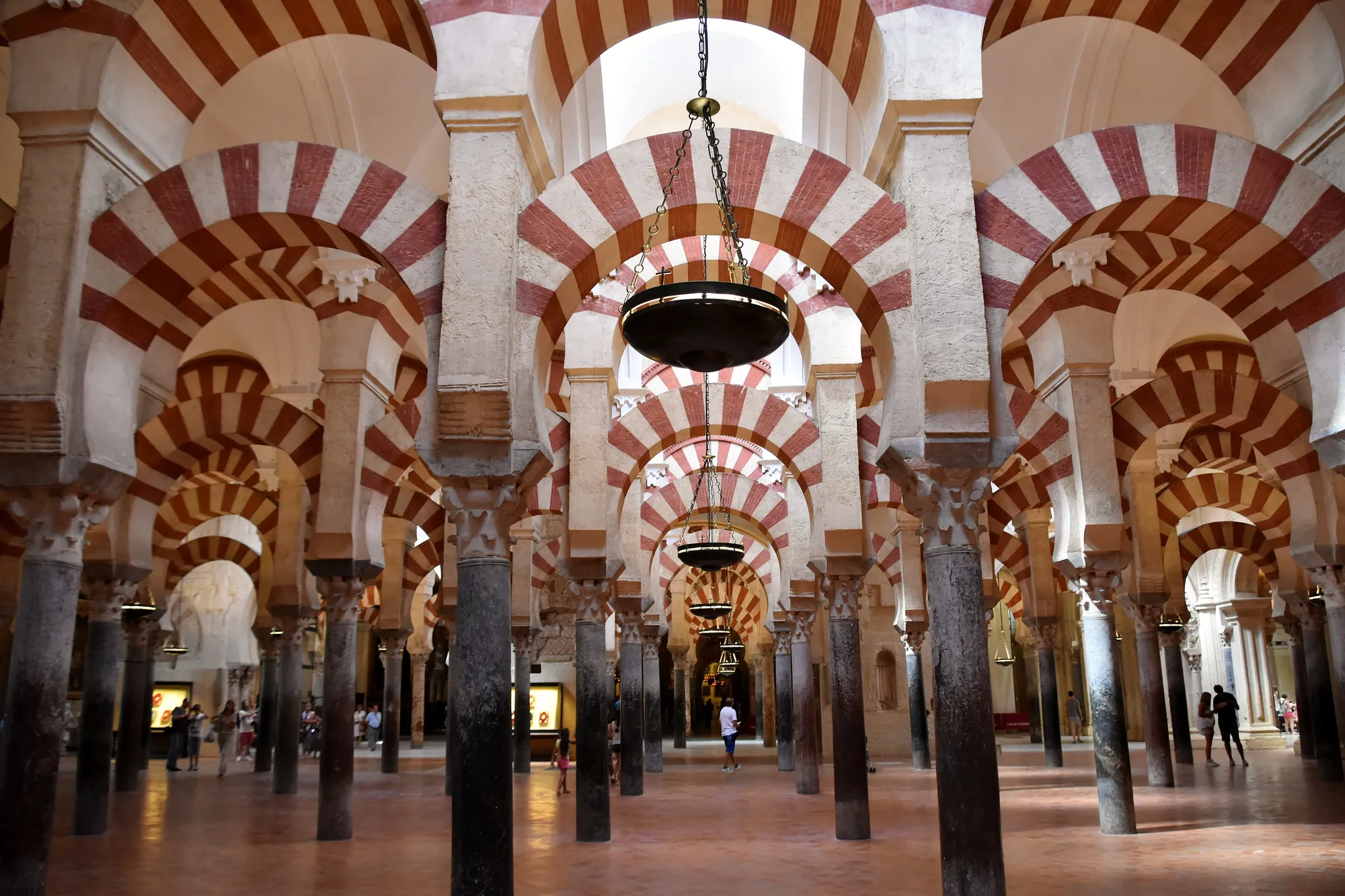
Andalusi classical music began in al-Andalus, the Muslim-ruled Iberian peninsula, and later spread across North Africa, according to Wikipedia. The article reports a tradition that it began in 9th-century Córdoba, under its emirs, and that some credit Ziryab with starting it. Its suite form, the nawba, survives in Morocco, Algeria and Tunisia. How far that tradition reached flamenco is still debated, but it explains why a Madrid room devoted to flamenco would honour him.
From a blackbird to a café sign
The café says the name honours a musician, poet and innovator born in Baghdad who settled in Córdoba, and it ties the choice to creativity, innovation and the meeting of cultures. A room that mixes traditional and new flamenco on one small stage fits that description. When you sit down for the show, you are in a Madrid café named after a ninth-century musician, not in a replica of his court.
Who this isn't for
This guide is background, not a ticket guide. If you only want to know what the ticket includes, go to the tickets guide instead. And if you want a firm answer on whether Ziryab shaped flamenco, no source here can give you one: historians treat much of his legend with caution. Read him as a symbol of how music crossed the Mediterranean and settled in Spain.
Read next: Café Ziryab tickets and what they cover
Frequently asked questions
What does Ziryab mean?
Blackbird. Wikipedia says it is a Persian and Kurdish word, and the chronicler Ibn Hayyan linked it to the musician's dark complexion, clear voice and pleasant character.
Did Ziryab invent flamenco?
No. Flamenco's origins are debated, and no source credits him with it. He is tied to Andalusi classical music and to Córdoba's court.
Did he really add a fifth string to the oud?
Tradition says so. Wikipedia reports that he is said to have added a fifth pair of strings, and it presents this as a traditional attribution.
Sources